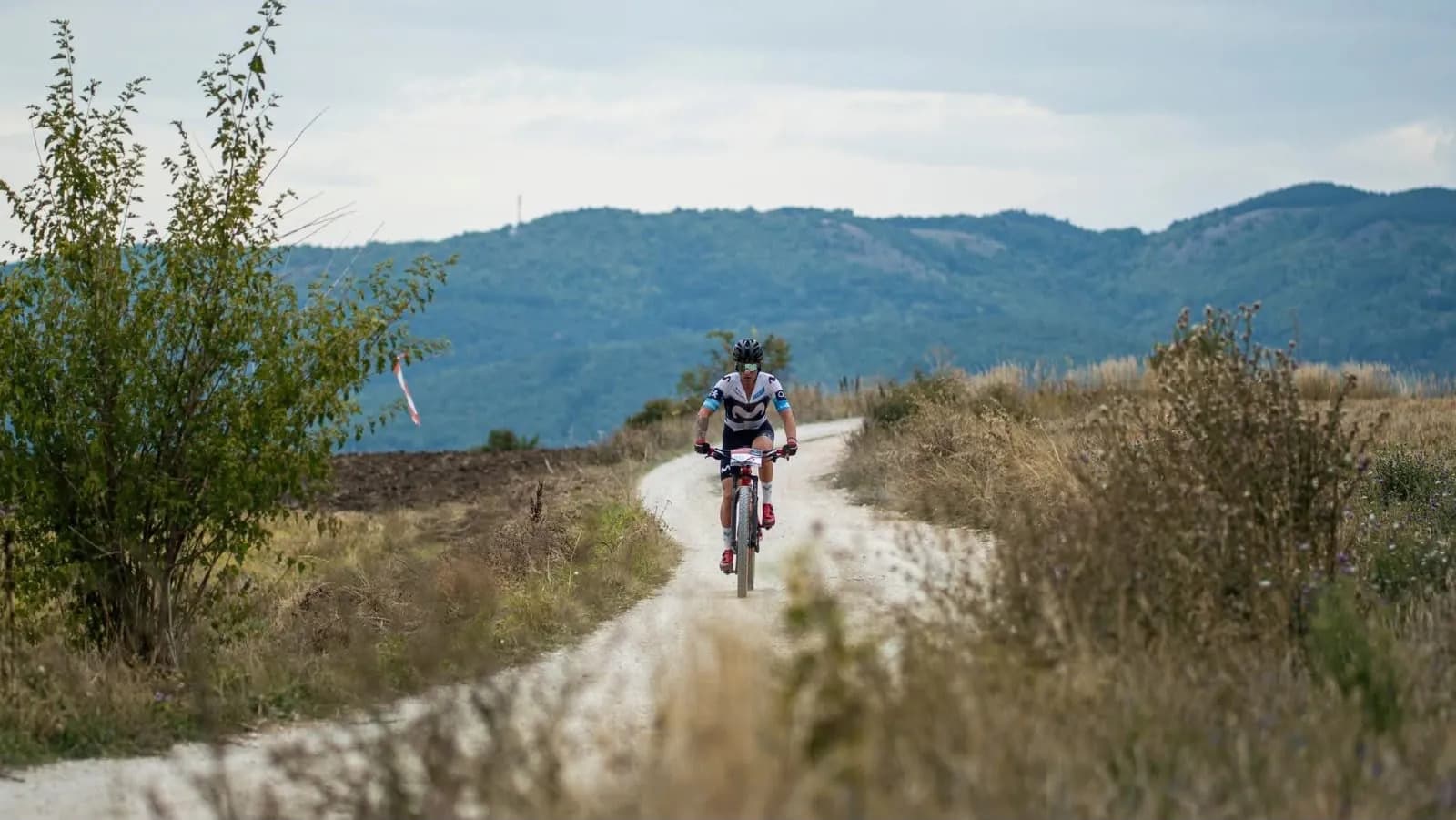
You are riding the ridge, alone for half an hour, and then round a bend stands a herd looking at you as though you were the guest. You are.
Horses have roamed free on the plateaus of Stolovi for decades. They are not tame, but they are not skittish either — they are used to people, and that is exactly where the danger lies: approaching them feels normal, and it is not.
Reading the herd before you approach
A horse speaks with its body, and it takes five minutes to learn. Ears back and flat against the head mean discomfort or threat. A raised tail and a stiff stance mean arousal. A horse that turns its hindquarters towards you is not fleeing — it is positioning.
A calm herd grazes spread out and lifts its head occasionally. A herd that has bunched together and is looking the same way has been disturbed by something, and that is the moment to stop and wait, not to pass.
Foals change everything. A mare with a young one has a tolerance radius far larger than usual, and there is no way to measure it in advance. So in foaling season you go wider around than looks necessary.
The rules of an encounter
Do not approach the herd, especially with foals present. Do not stand between two horses. Get off the bike and go around in a wide arc, calmly and without sudden movement. A horse that feels boxed in answers with its legs.
Push the bike on the side of your body away from the horses, so there is always something between you and them. Not because they will attack, but because a horse that startles takes a sideways step heavier than you and the bike together.
Do not shout, whistle, or accelerate to get past "before they move". Fast movement is the one thing a herd will reliably misread.
If the herd is on a narrow section with no way around — you wait. It is a few minutes, and it is the only safe choice.
Food: why it is better not to
If you really want to feed them: carrot and apple, in small amounts, from an open palm. Never sugar, sweets or pastry — it upsets their digestion and teaches them to demand food from everyone who passes, which is bad for them and for the next cyclist.
The open palm is not a detail: fingers curled around the food look to a horse like part of the food. If you feed, you feed from a flat palm and from the side, never in front of the face.
But honestly, it is better not to feed them at all. A herd that has learned people mean food will approach every next visitor, and among those will be someone with a child and someone who does not know how a horse behaves. The habit you create is paid for by somebody else.
Photographs and manners
The best photograph comes from a distance anyway. A herd on the ridge, morning haze, nobody disturbing them — that is the picture worth taking home.
A phone with a zoom, standing still and patience produce a better frame than any approach. Horses that are relaxed look different from horses that are watching you — and that shows in the picture.
And last: they are there for life, you are passing through. The ridge is their house; the bike is a guest crossing the yard.