Before flying became a sport with licences and competitions, it was a handful of people carrying fabric up a hill, trusting the air to hold them.
According to the pioneers of the sport from Kraljevo, the first flights from the slopes of Stolovi date back to the mid-eighties, with 1986 named as the starting year. They launched above the village of Bogutovac, some twenty kilometres from town, on equipment that would not be allowed off the ground today.
What the equipment of that era looked like
Early wings were rectangular, with few cells and a glide ratio a modern pilot would describe as a fall with a delay. People flew without a reserve parachute, often without a helmet, and altitude was a matter of estimation.
What kept those people in the air was not the equipment but caution. They flew in calm weather, morning and evening, and from hills gentle enough that a mistake would not be the last one.
For comparison, a modern school wing has vastly better stability, a certified safety category, and a manual that says exactly what it does in which situation. The progress is not that people fly more boldly today — it is that less of it rests on luck.
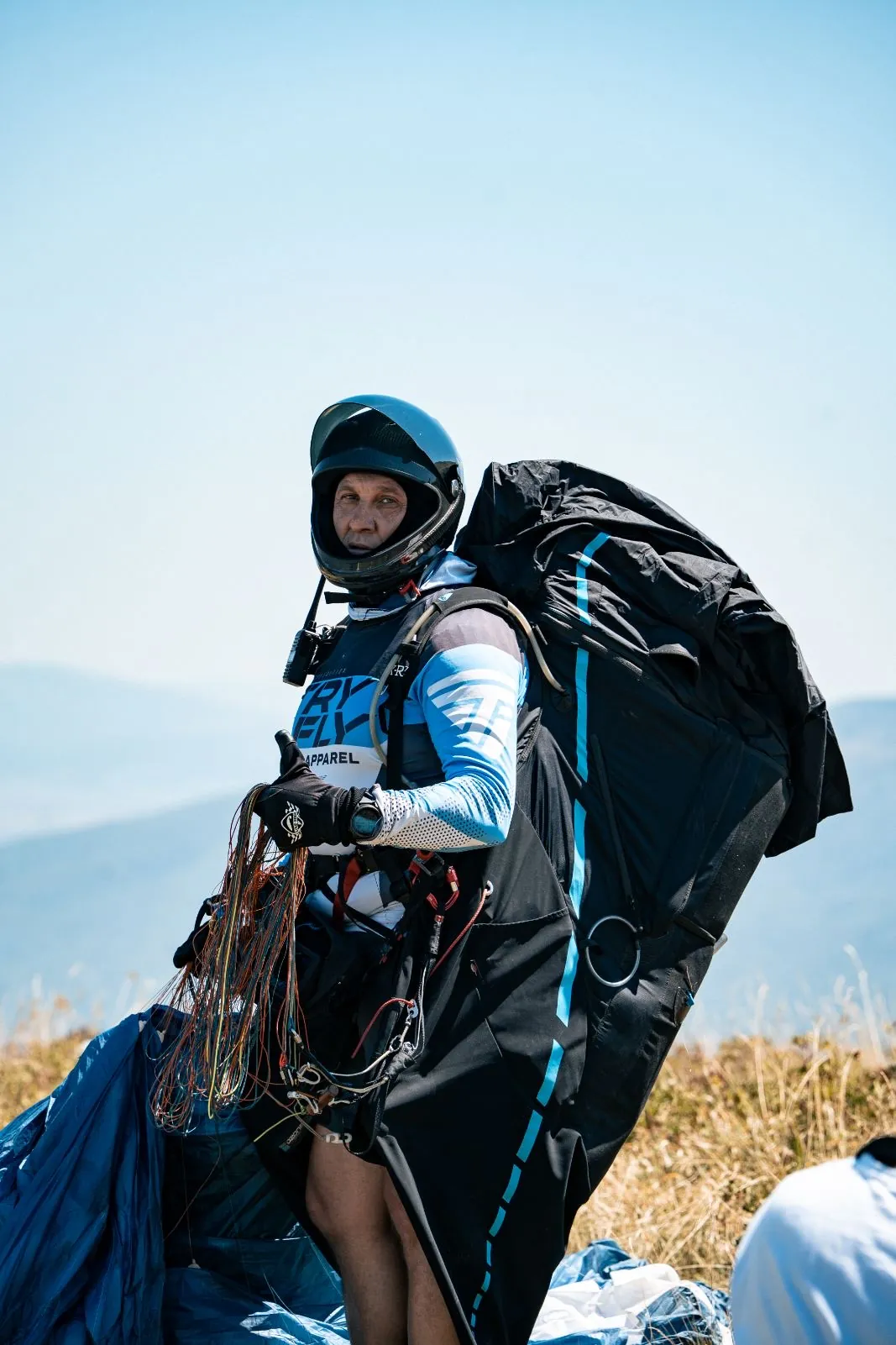
Why Stolovi in particular
Why there? Stolovi has what a pilot looks for: a ridge facing the valley, enough height difference to give you time to decide, and ground that heats unevenly and so builds thermals. The Ibar valley below works like an enormous bowl, collecting warmth and sending it back up.
Height difference is not only a matter of flight duration. It is a matter of safety: a pilot with six hundred metres below has time to recognise a problem, assess it and act. At a hundred metres there is neither.
A ridge facing the valley gives something else too — dynamic lift, wind rising up the slope. It is the most stable way to stay airborne and the difference between a five-minute flight and a two-hour one.
What has changed since
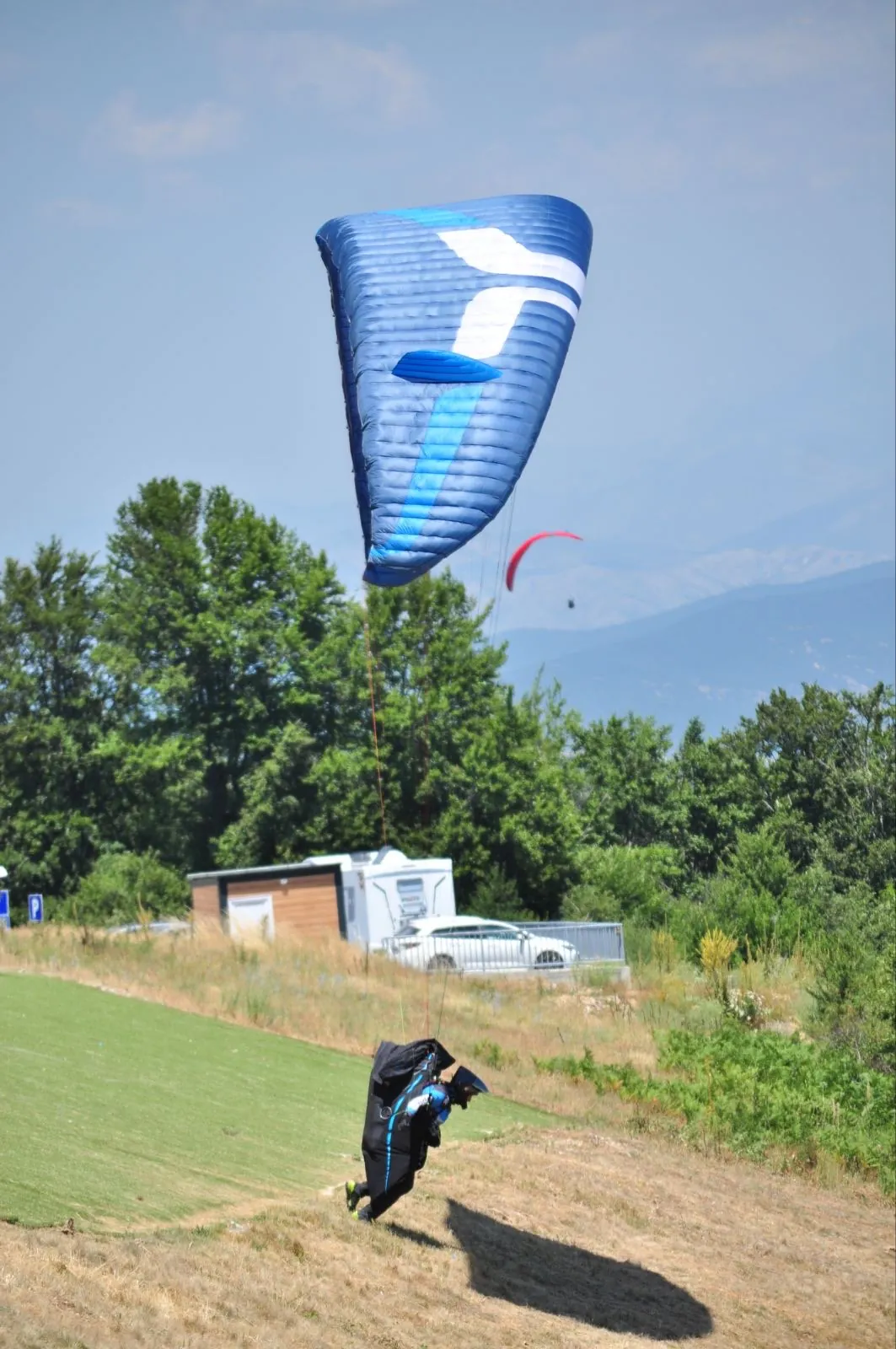
Today Bogutovac is one of the better-known launch sites in Serbia, and Stolovi a place that is flown all year round. Schools, tandem flights and regular visitors are something that did not exist in the eighties even as an idea.
The procedure has changed too. A licence, training, equipment checks and flight notification are now a normal part of the sport rather than bureaucracy. A scene that respects that has fewer accidents, and fewer accidents means launch sites stay open.
What has not changed is the feeling of that first step off the edge — the moment running stops and flight begins. Technology has not touched that part and probably will not.
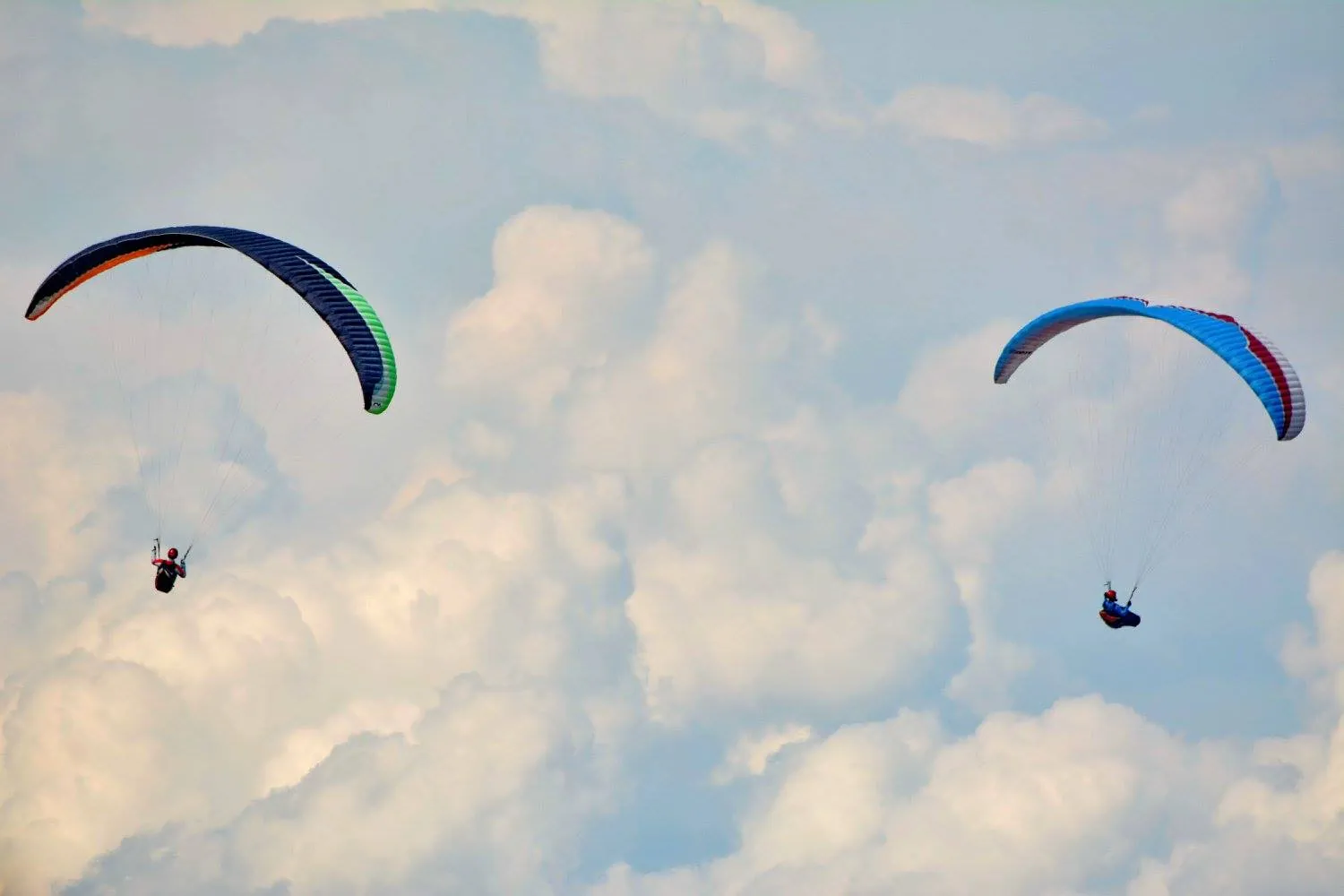
Why this matters for 4 Elements
For 4 Elements, paragliding is not decoration. It is the second stage and it comes straight off the ridge: the legs are already spent on the climb, and the air does not ask how tired anyone is — it only asks to be read.
Fatigue in the air is invisible from outside, but it shows in decisions. An exhausted pilot reacts later, judges height worse, and is inclined to push a glide where he should not. That is why in races like this the stage in the air is planned with the largest margin, not the smallest.
The inheritance of a scene that has existed here for decades is the reason this can be organised properly at all. People who know the terrain also know when not to fly.