Nobody quits because they did not have carbon wheels. They quit because of an unlubricated chain and a brake that faded on the third descent.
Before a long climb, three things are worth checking, because they are the ones that fail: drivetrain, brakes and tyre pressure. All three take ten minutes, and all three are why people end up pushing a bike downhill.
Drivetrain: the chain is a consumable, not a fixture
A worn chain eats the cassette and skips exactly when you stand up. A chain wear gauge costs about as much as a coffee and saves a cassette that costs ten times more. The rule is simple: the chain is replaced when the gauge reads 0.5 mm, not when it starts skipping.
Lubrication goes on a clean chain, not over dust. Oil applied over mud makes a paste that grinds the teeth faster than a dry chain would. Dry lube for a dry summer, wet lube for autumn and mud — and the excess is always wiped off, because oil on the outside of the chain only collects grit.
The derailleur is not adjusted on race day. If it skips, you adjust it a week earlier and then ride once to see whether it holds. A cable stretches during the first rides after replacement — that is normal, and it is exactly why you do not change it the night before the start.
Brakes: contaminated pads do not brake, they heat
The most common mistake is leaving pads until you hear metal. By then the rotor is scored and it goes too. Pad thickness is checked by eye through the caliper opening — thinner than a millimetre and a half, and it is replaced.
Contamination is another matter. A drop of chain oil, a cleaning spray, even a finger on the rotor, and the brake stops working properly. You recognise it by sound — a squeal and very little stopping power. The fix is new pads and a rotor washed with alcohol; sanding a contaminated pad is a waste of an afternoon.
On a long descent an overheating brake does not fail all at once but gradually: the lever travels further each time. The technique that prevents it is braking hard and briefly, then releasing, instead of dragging the lever the whole way down. A brake that is released is a brake that cools.
Tyres and pressure: the number on the sidewall is not a recommendation
Pressure is not set by the number on the tyre but by terrain and rider weight. The number on the sidewall is the upper limit the casing tolerates, not the value that rides best.
Lower pressure grips on rock and roots but raises the risk of a pinch flat and of the tyre rolling on a sharp turn. Tubeless with sealant removes most of that compromise: it works at noticeably lower pressure and seals small punctures by itself.
Sealant dries out. A tyre left standing for six months contains nothing but a lump of rubber dough. It is topped up twice a year, and that is five minutes of work that saves two hours of walking.
Gearing and rhythm
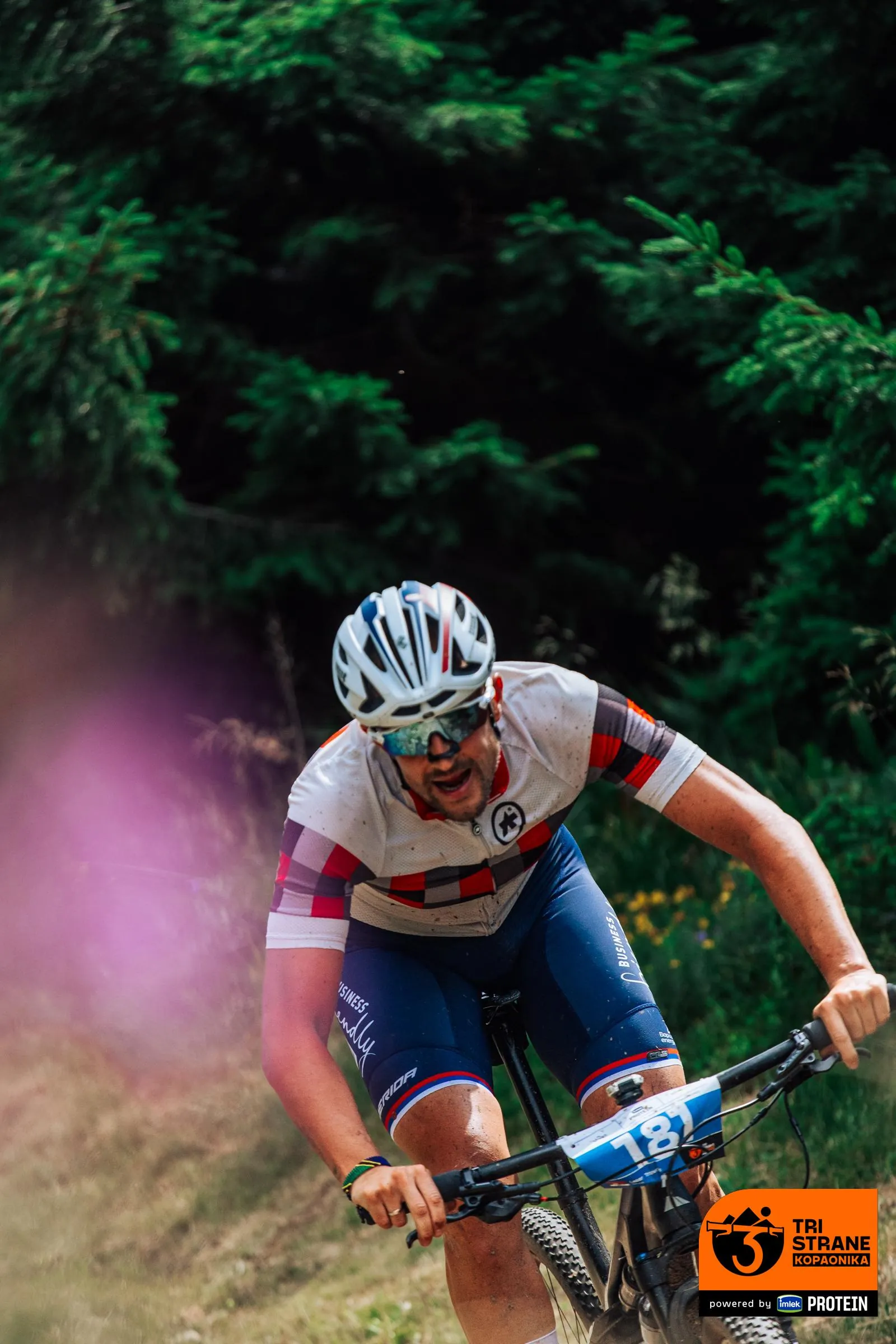
A climb is not beaten by strength but by rhythm. Better to shift to an easier gear ten metres before you need it than to shift under load and drop the chain in the worst possible place.
A cadence of roughly 70 to 90 on a climb uses less muscle and more heart, and the heart recovers faster. A rider grinding at 50 arrives at the top with legs that are finished for the day — and in a team race that means the next stage is in trouble too.
Sitting or standing is a question of terrain, not style. Seated is more efficient and keeps traction on the rear wheel; standing is used briefly, for sudden pitches and to change which muscles carry the load. A rider who stands the whole climb spends up to twenty per cent more.
The small thing that saves a race
A spare rear derailleur hanger. Cheap, pocket-sized, and without it the ride is over — the hanger is deliberately made to break before the frame is damaged, which is precisely why it breaks. Every frame has its own hanger shape, so you carry yours.
Alongside it, the minimum: a multitool with a chain breaker, two patches, a pump or cartridge, a quick link of the right width, and tape. Together that is under half a kilo and covers ninety per cent of what can be fixed in the field.
What does not fit in the bag is the pre-ride check. Wheels tight, seatpost clamped, bars not moving, brakes biting, tyre not leaking. Twenty seconds, every time.