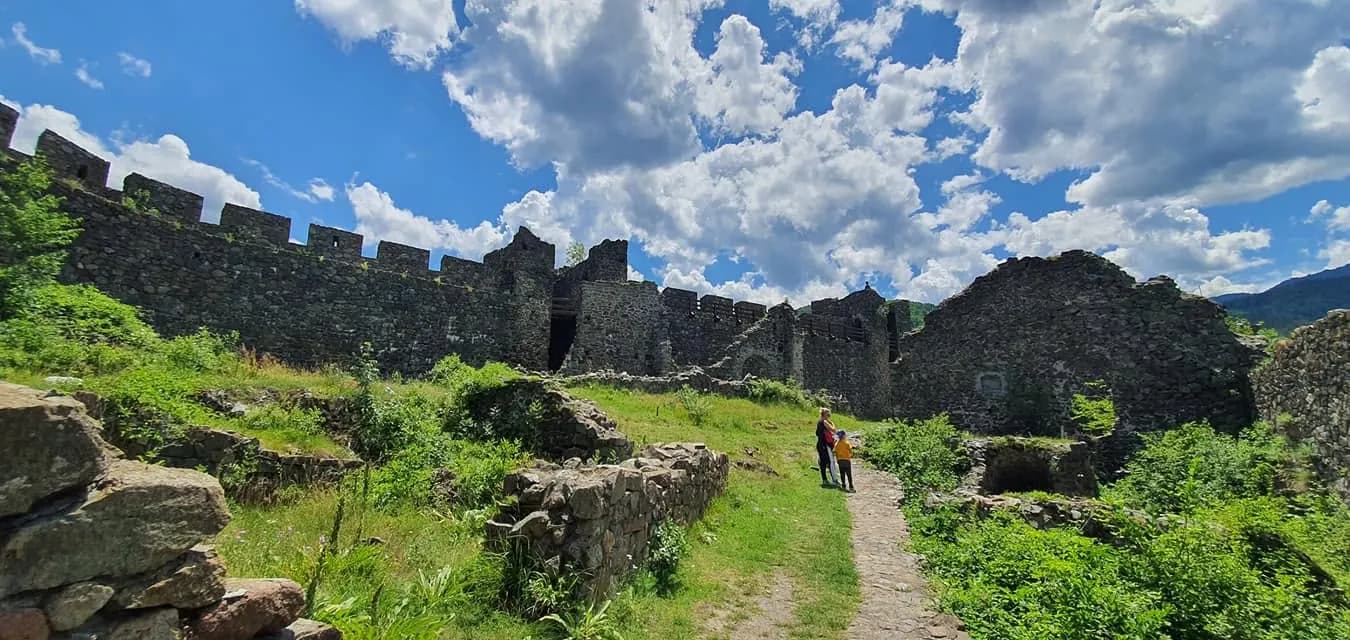
A gorge is where river and mountain work against each other, and the trail runs exactly between them.
The transition from valley to ridge is what makes this terrain demanding. The elevation does not accumulate gently but in surges, with sections where you use your hands as much as your legs.
A climb in surges asks for a different head
A steady climb, however long, is psychologically simple: you find a rhythm and hold it. A climb that arrives in surges does not allow that. Fifteen minutes of gentle path, then a hundred and fifty metres of elevation in a short burst, then flat again. Each time the body has to shift from one mode to another, and every one of those transitions costs.
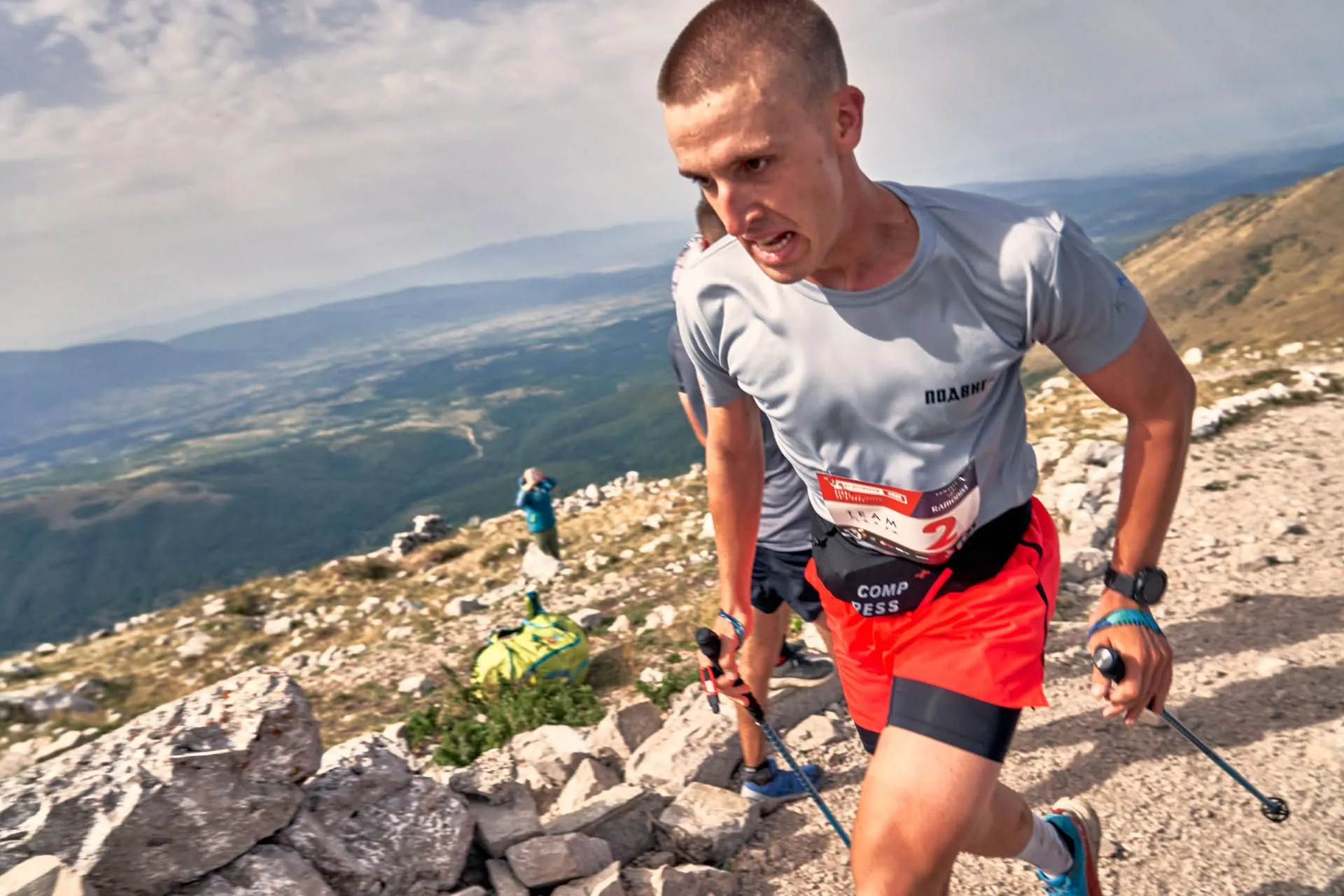
An experienced runner on this kind of ground gives up on running the steepest parts before starting. Fast hiking up a steep pitch, hands on the thighs, uses noticeably less oxygen than running, and the speed difference is small. That is not surrender, it is arithmetic — professionals in mountain racing do it openly.
What you must not do is run the steep section and then stand there to get your breath back. Stopping on a climb is the most expensive thing in trail running: the pulse drops, the muscles cool, and starting again demands a fresh payment.
Heat is the real opponent
Rock holds warmth and sends it back up, so the gorge is often noticeably hotter than the thermometer in town suggests. On top of that a gorge blocks the wind — and without moving air sweat does not evaporate, so the body stops cooling itself exactly when it needs to most.
You carry water for the whole climb, not for half of it. A practical rule in heat is half a litre to a litre an hour, with some salt — plain water during long sweating dilutes electrolytes and creates a new problem instead of solving the old one. Tablets, salt in the drink or a salty snack; the form does not matter.
A cap and a thin long-sleeved top sound counterintuitive in heat, but they work: a covered shoulder heats less than a bare one, and light fabric that reflects the sun is worth more than shade the ridge does not have.
Hands, poles and technique on rock
Sections where you use your hands as much as your legs are not climbing, but they demand attention. The basic rule is three points of contact — two feet and a hand, or two hands and a foot — and moving only one at a time.
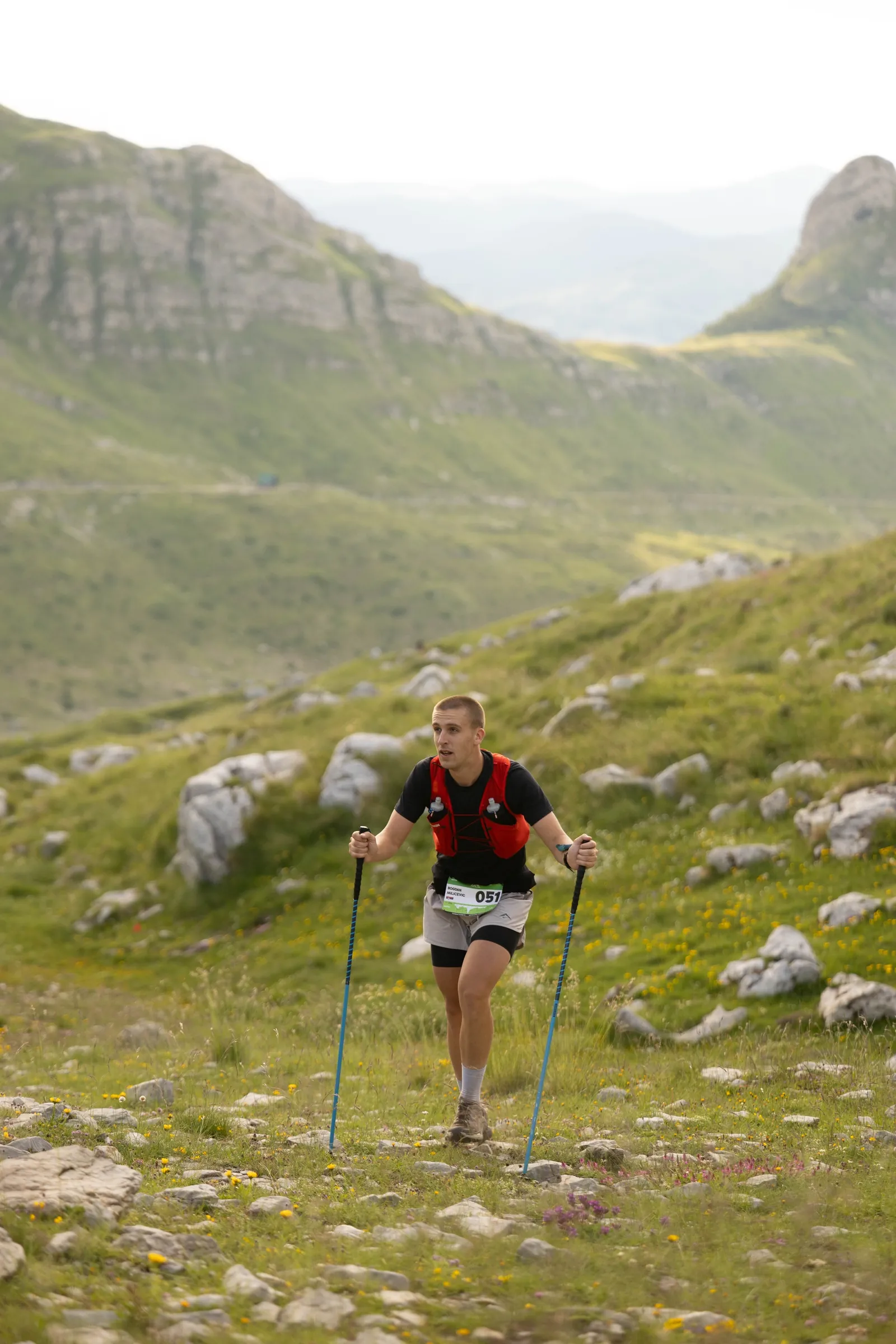
Poles are a serious advantage on this terrain on the climb and on a long descent, and a nuisance on technical sections where you need your hands. That is why folding poles exist, and why stowing them on the move is worth practising. A runner trying to pack poles for the first time mid-race loses more than the poles gained.
On a rocky descent the intuition is backwards: you go slower by shortening the stride, not by braking. Heel-braking on loose rock is the most common way to end up on your back.
What you carry, and what stays at home
For a long climb through the gorge the minimum is water, some food, a thin windproof and a phone. Weather on the ridge can change quickly, and on an overcast day the difference between valley and summit can be ten degrees.
What you do not carry is everything else. Every extra kilo on your back is a kilo you lift eight hundred metres. The best way to check is to weigh the pack before leaving — the number usually surprises.
The reward, and why it is not the point
The reward is the view from the ridge, and this is one of the rare cases where the cliché holds. But for the race that is not the point — the point is arriving up there with enough left for what comes next.
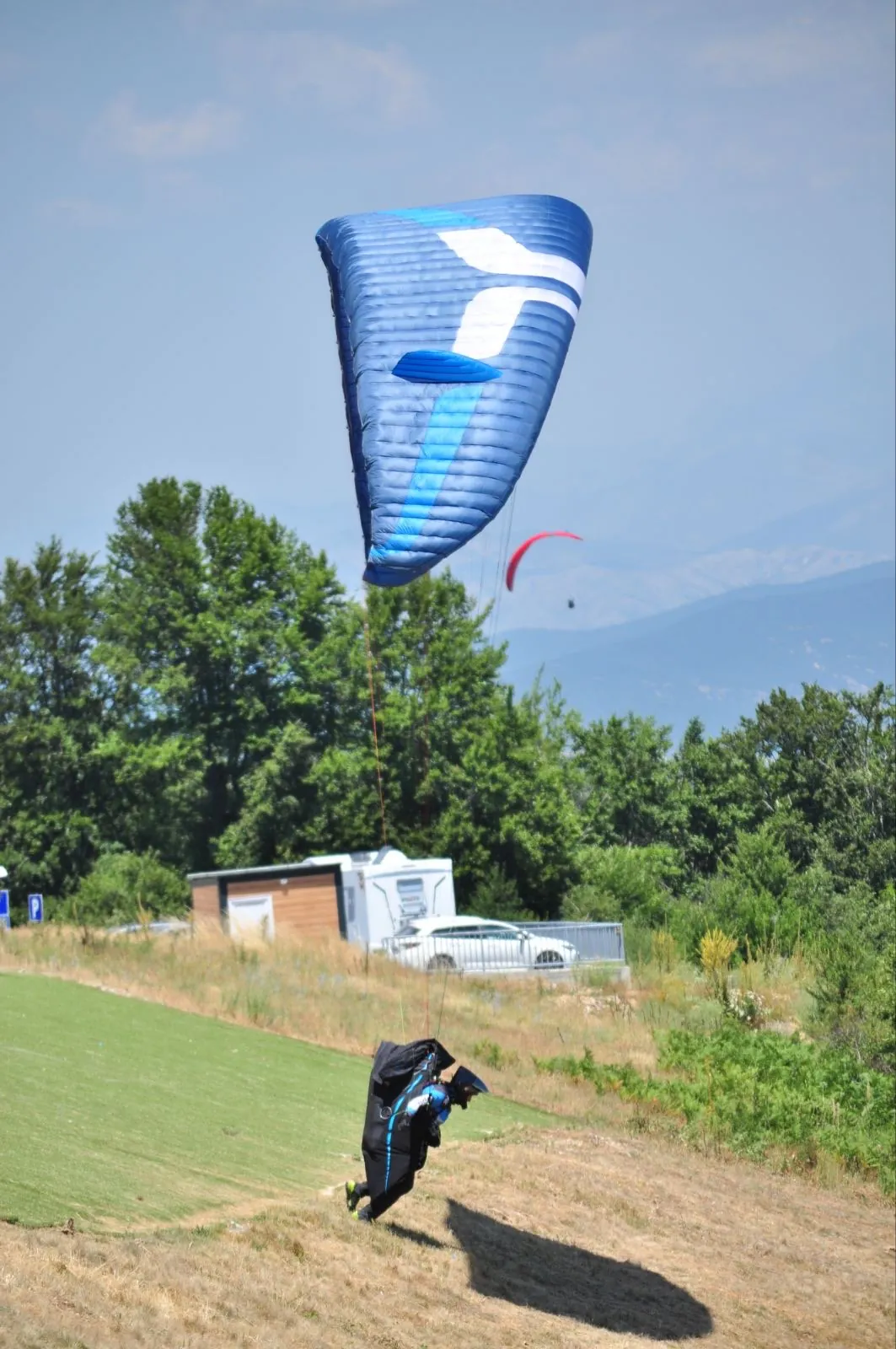
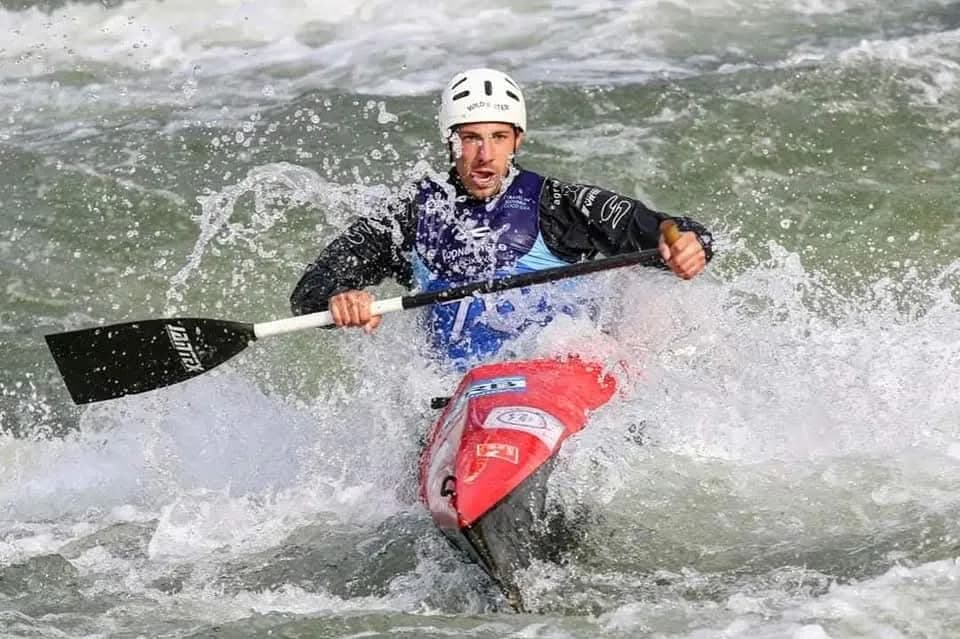
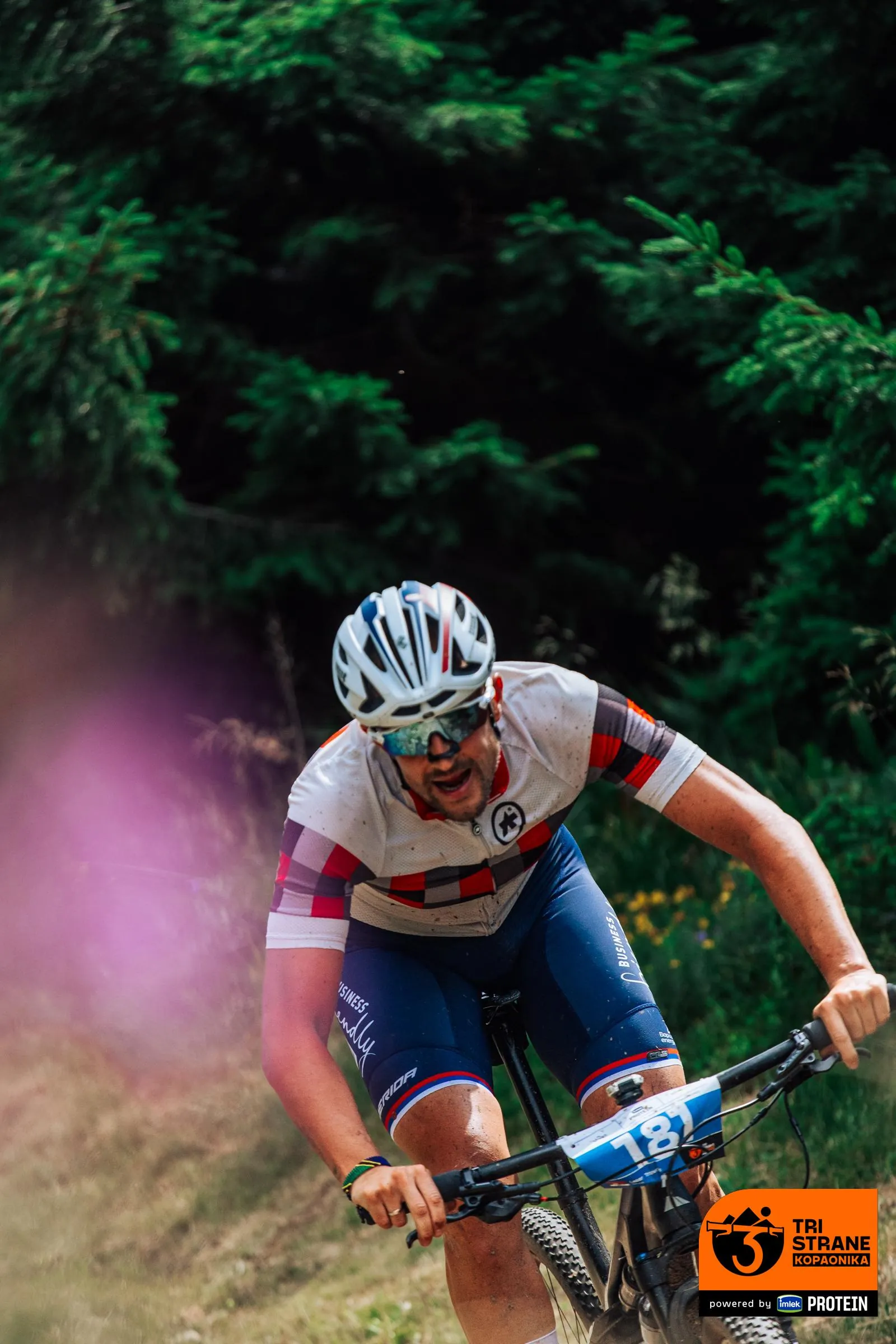
In 4 Elements the air, the bike and the river come after the run, and each of those stages charges for what the previous one ate. A runner who spent the last of it on the ridge has left the team three disciplines in debt.
Official courses, water points and safety positions will be published once confirmed.