A mountain that flies well is not a mountain that forgives. Stolovi offers conditions, but asks that you read them before you open the wing.
A summer day on Stolovi follows a recognisable rhythm. Morning is calm and technically the easiest. Around midday the ground heats up and the thermals become usable — and nervous with it. Late afternoon settles the air and returns conditions to smooth flying.
A day in three parts
The morning window is for learning and for calm flights. The air is stable, lift is weak or absent, and everything happens slowly. For a pilot in training that is the best part of the day; for a pilot who wants height, it is not.
Midday is the opposite. The sun heats the slopes and they begin releasing that warmth in bubbles — thermals. They carry you up, but they arrive unevenly, so the wing moves in and out of lift and it feels like being nudged from the side.
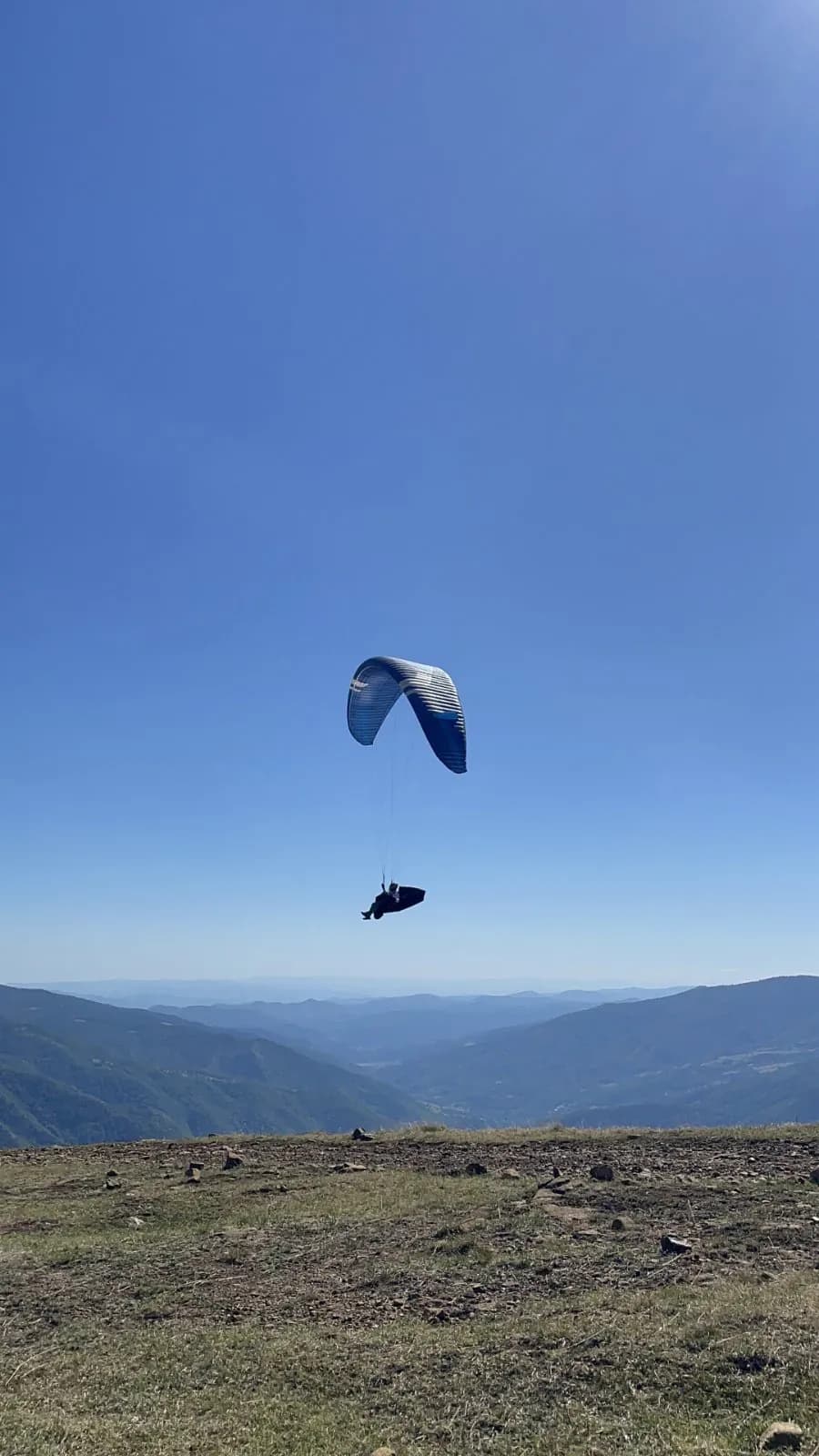
Late afternoon is the finest part of the day to fly. The thermals weaken but the air is still warm and rising along the slope, so flights are long and smooth. It is also when most photographs are taken, and that is no accident.
The hardest thing to learn is when not to fly. The shift from the morning regime to the midday one can be abrupt, and the worst moment to launch is exactly in that transition — when the air is already active and still looks calm.
The valley wind is the real exam
The valley wind demands the most attention. The Ibar gorge channels the flow, so it can be pleasant at launch and something else entirely a hundred metres lower. That is why the judgement is never made at the launch alone.
A gorge acts as a funnel: the same air that moves moderately across open plain accelerates through a narrow passage. The consequence is that wind speed in the valley can be noticeably higher than up top, and that the direction changes with height.
In practice you read it from several places: smoke, dust on a road, grass and water rippling, and the movement of cloud. A pilot who looks only at the windsock on launch is seeing half the picture.
There is also a rule that holds anywhere there is a valley: when in doubt, look at the landing. Conditions where the flight ends matter more than conditions where it begins.
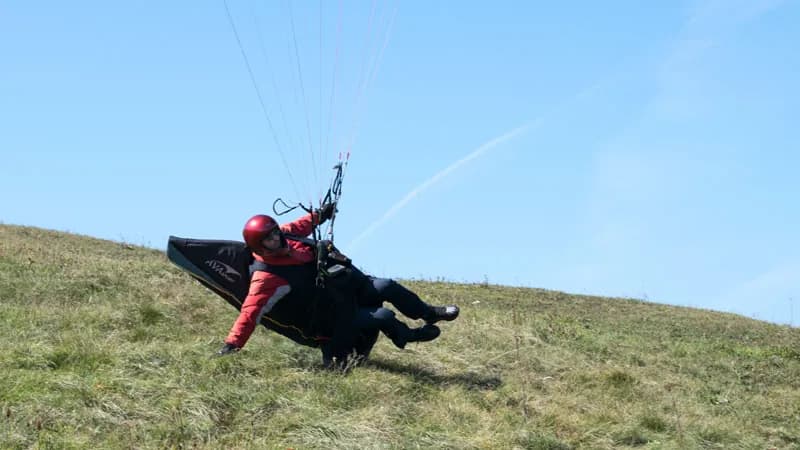
Launches: short, grassy, no second attempt
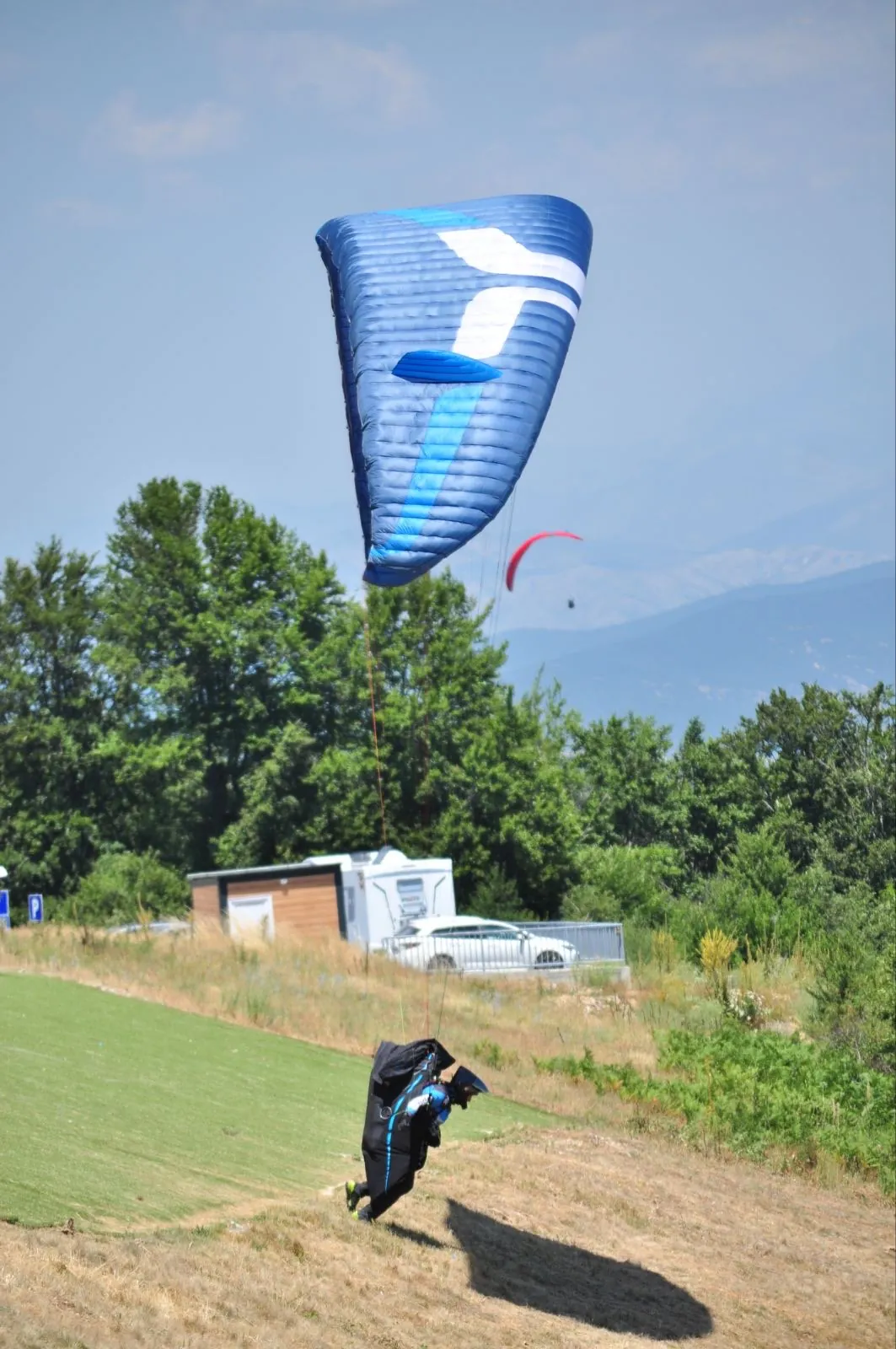
Launches along the ridge are grassy and short, which means take-off technique has to be clean — there is no room for a second attempt. Vehicle access reaches most sites; the rest is carried on foot.
A short launch means the wing has to come up straight the first time. A crooked inflation can be corrected while walking on a long slope; here you abort and start again, and that is a lost window in conditions that keep changing.
So the preparation is done without hurry: wing laid out in an arc, lines untangled and checked in order, buckles closed, helmet and reserve inspected. A pilot who skips that because someone is waiting makes a mistake that stays invisible until it is late.
For the same reason you do not stand in a group on launch. A wing someone else brings up at an awkward moment can pull yours with it, and that is among the most common incidents at popular sites.
What a pilot carries
The basic set is clear: a wing that matches the pilot’s level, a serviced reserve, a helmet, a harness with back protection, and a radio if flying in a group. Plus a vario and GPS, because judging height by eye is not judging.
Clothing is routinely underestimated. It is considerably colder at a thousand metres than on launch, and a shivering pilot decides badly. Gloves and a windproof layer are safety equipment, not comfort.
And without exception: a charged phone, a flight plan known to someone staying on the ground, and an agreed time to check in. That is cheaper than any search.
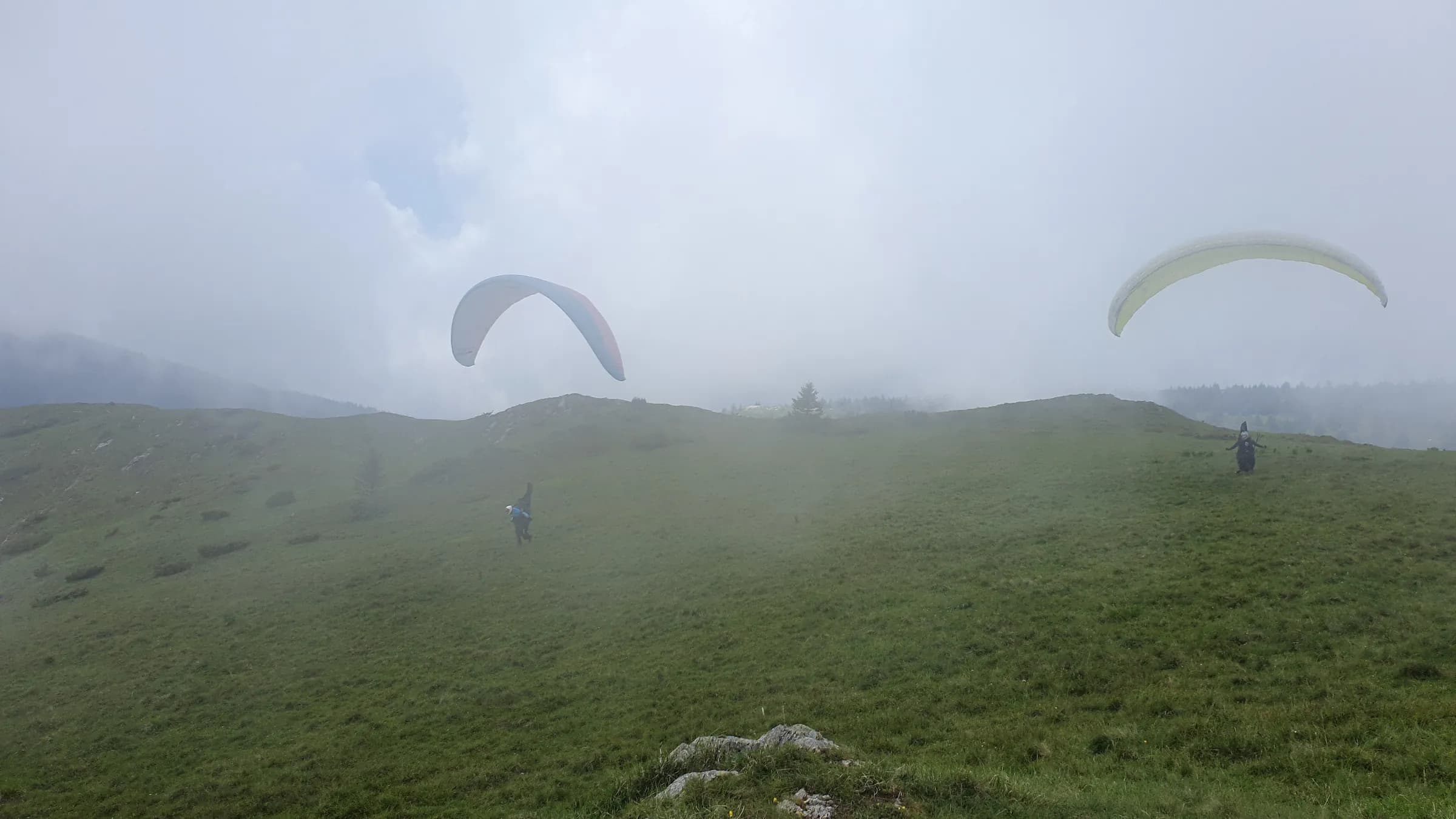
What is not published yet
These are the general characteristics of the terrain. Official launch and landing points for the race will be published once confirmed, with a date and version marker, and until then none of this should be taken as a course.