In some towns the river is scenery. In Kraljevo the river is the reason people leave the house.
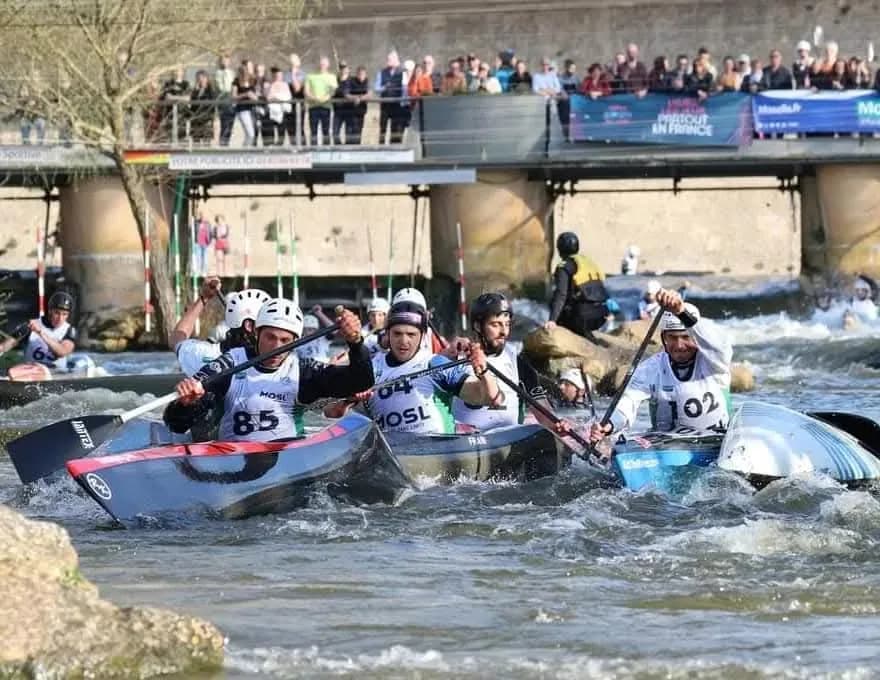
Descents down the Ibar have been a mass event here for decades — a day when competitors and first-timers end up on the same water. Out of that crowd, every year someone stays in the sport.
Why a mass descent is not folklore
It is easy to write off a mass descent as entertainment. But it does something no club can do alone: it puts people on the water who would never otherwise think of sitting in a boat. Out of several hundred, a few stay.
It is the same mechanism by which any sport survives in a small town. The point is not how many turn up, but what share come back the next year — and which of them, after two seasons, go looking for a club, a coach and a training slot.
So the descent has a second face: it is the cheapest and most honest selection process there is, because nobody signs up because they have to.
Slalom is a different sport
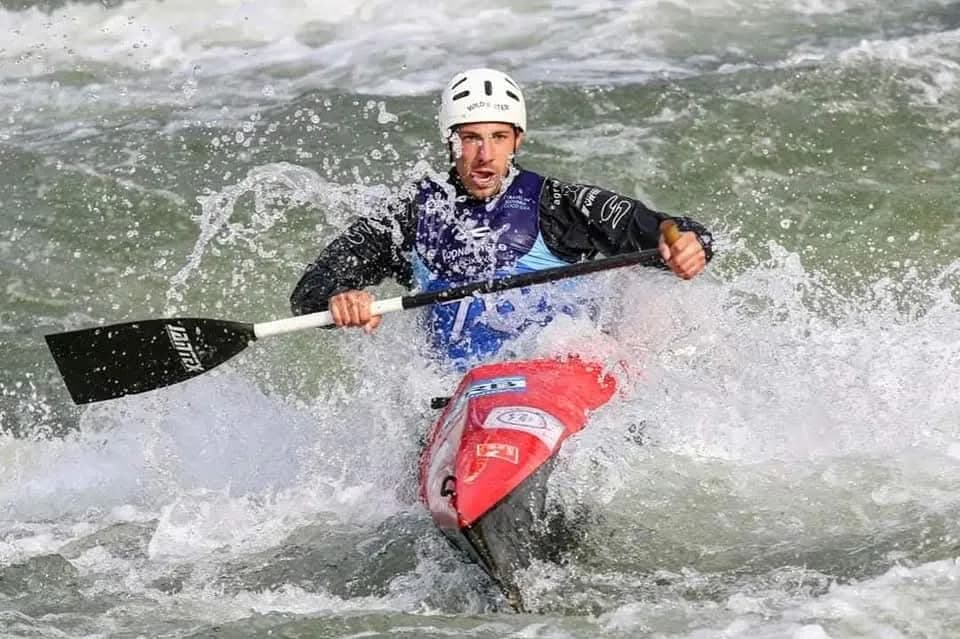
The competitive side is another matter: slalom demands precision inside half a metre while the water works against you. Time is measured in tenths, and the gap between power and technique becomes visible.
Gates are passed without touching, and every touch is a penalty. That means the paddler has to go fast and control the boat to within centimetres at the same time — two things that cancel each other out in almost every other water sport.
Upstream gates are what make slalom slalom. An upstream pass demands putting the boat into the calm water behind an obstacle, turning it, and returning it to the current without losing speed. Learn that, and on white water afterwards you can do as you please.
What of it matters for 4 Elements
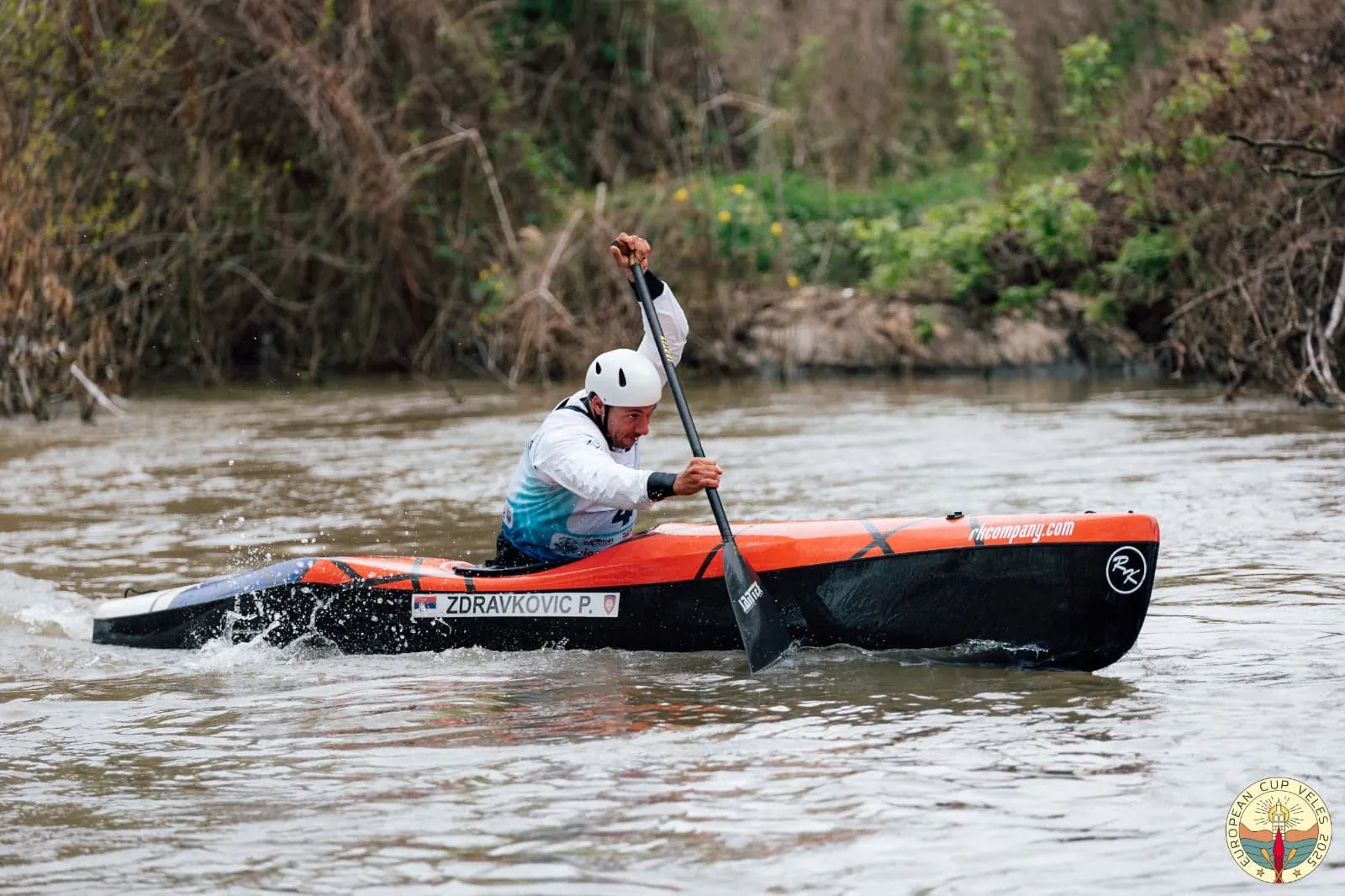
For 4 Elements, the kayak is the stage where a team can win back the minutes lost on the climb — or lose them for good. The river does not negotiate.
But unlike the run and the bike, here time is lost in a single lump rather than gradually. One capsize in the wrong place costs more than five bad minutes uphill. That changes the preparation too: the aim is not the fastest run but the most reliable one.
In practice, a team that plans well sends the member with the most hours in a boat, not the strongest one. That is a distinction teams grasp after their first race, and it is better grasped before.
If it is your first descent
The vest does not come off, not even on the calm stretch, and that is the one rule without exception. With it goes footwear that stays on in water — trainers, not flip-flops — because sooner or later you walk on rock, and a bare foot on wet rock is the fastest way to end the day early.
The sun on water is stronger than on the bank, because it reflects and hits from below as well. Cream, a cap and a shirt are serious equipment on a descent lasting several hours, not an overreaction.
Phone and keys go in a dry bag, closed before you sit in the boat, not after. Anything left in your hand when the boat goes over is no longer yours.
And most important: capsizing is not an accident, it is part of the day. When it happens you let go of the boat, keep your head upstream, feet up and forward, and swim to whichever bank is closer — not the one you were heading for.
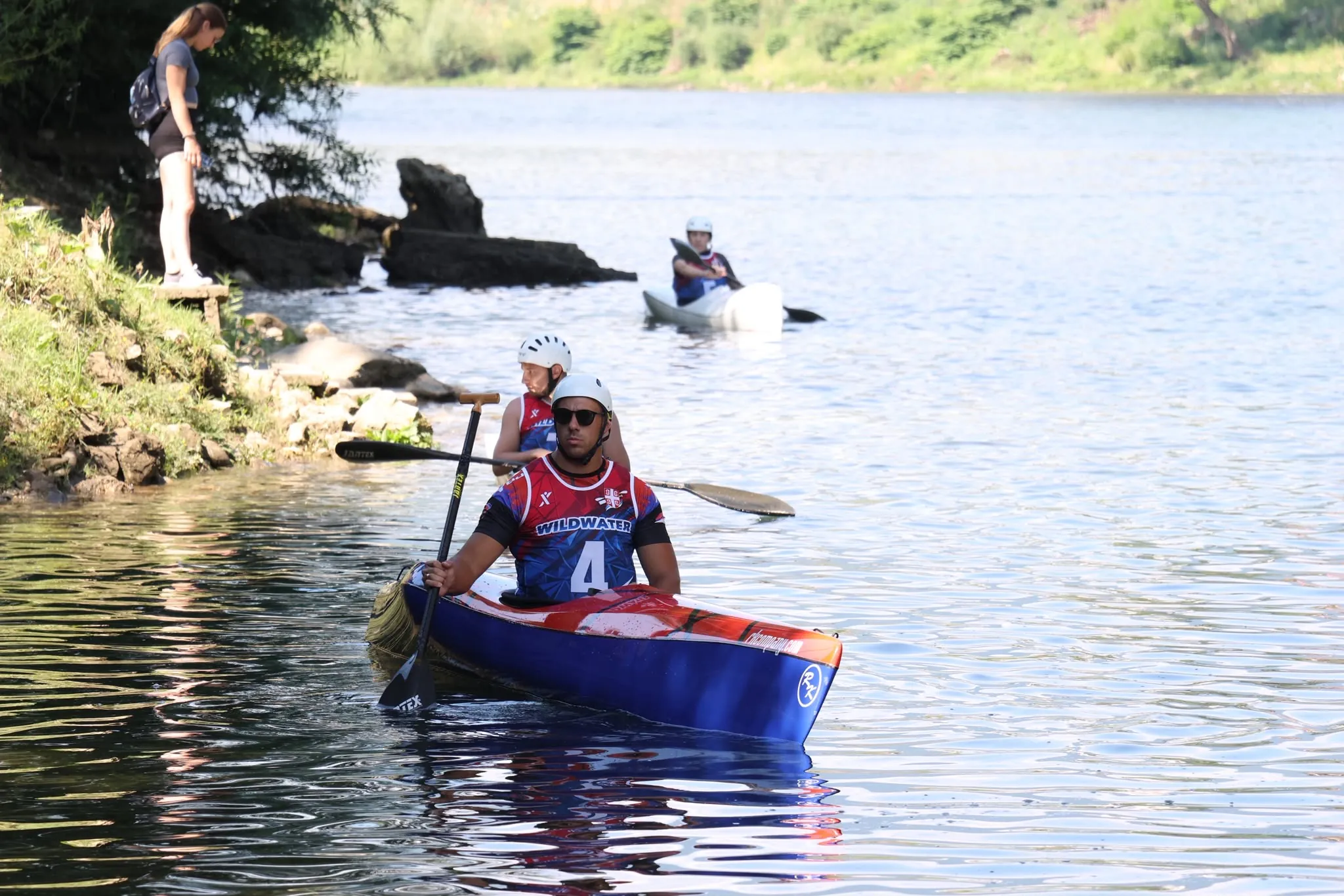
Safety on a crowded day
When many people of very different experience end up on the water together, the greatest danger is not the river but the crowd. Collisions, boats stopped in a narrow passage, and people swimming between hulls — those are the real situations at every mass descent.
The rules are the same everywhere: the vest is always worn, spacing is kept, and you stop after a passage rather than in it. Anyone who capsizes lets go of the boat first, works out where they are, and only then reaches for the gear.
The list of clubs, competitions and champions from this town will be published once the organiser confirms them.